
When analyzing digital gambling in Germany today, the shift toward mobile-first entertainment stands as the most important development of the past five years https://velwinskasino.de/. Players no longer wonder whether they can access their favorite titles on a smartphone; they anticipate the entire casino floor to fit perfectly in their palm, with no compromises on speed, visual fidelity, or game depth. At Velwins Casino, we have built our platform around the understanding that a seamless mobile experience is the very foundation of modern gaming. This article breaks down what genuinely functional mobile casino gaming entails, from the engineering that keeps slot reels spinning smoothly on a five-inch screen to the regulatory frameworks that secure every wager placed from a train seat in Hamburg. We will explore the game categories that translate best to smaller displays, the payment rails that enable instant deposits via a thumbprint, the bonus mechanics adapted for on-the-go play, and the security architecture that protects a session when a device hops between Wi‑Fi and 5G networks.
The Technical Core Behind Mobile Slots and Table Games
To understand what makes a mobile casino game function correctly on a device with limited processing power, we need to begin with HTML5, the markup language that has retired Adobe Flash from the gambling industry. Unlike legacy Flash titles that needed plugins and depleted batteries within minutes, HTML5 games render natively in mobile browsers and dedicated apps without additional software layers. The random number generator algorithms, animation sequences, and audio feedback all function within a single lightweight framework that modern smartphone chipsets process effortlessly. For the player, the practical difference is measurable: a well-optimized HTML5 slot starts in two to five seconds on a standard 4G connection, sustains a stable frame rate even when the device gets background notifications, and uses roughly forty percent less battery per session than its Flash-era predecessors. This efficiency is the baseline that allows an entire casino lobby to live inside a pocket.
Beyond rendering technology, the true engineering challenge is in touch-target design and user interface adaptation. Desktop casino games rely on a precise mouse cursor, but a mobile screen needs that every interactive element be large enough for an adult thumb to press without accidentally activating an adjacent control. At Velwins Casino, we emphasize titles where the spin button rests in the lower third of the display, within the natural arc of a right-handed grip, while bet adjustment controls and the paytable stay tucked into corners that stop mis-taps during rapid play. The same principle carries over to live dealer streams: the video feed must adapt dynamically to preserve card legibility on a six-inch screen, and the betting overlay should fold into a retractable drawer rather than permanently covering the dealer. On the server side, we maintain geographically distributed nodes and load-balancing protocols that direct traffic based on real-time network conditions, maintaining the round-trip latency for a blackjack deal under three hundred milliseconds even when German mobile carriers send data through Amsterdam or Frankfurt exchanges.
Security Framework Tailored for the Mobile Threat Surface
Mobile devices introduce attack vectors that desktop security models were never designed to tackle, and a casino platform handling real-money wagers over wireless connections must address every one of them. The basic protection is Transport Layer Security encryption implemented to all data exchanges between the mobile client and the casino server, but TLS alone does not fix the problem of a device switching between cellular towers and untrusted public Wi-Fi networks. When a player at a café links to a hotspot named after the establishment, they may unwittingly expose their session to a man-in-the-middle attacker operating a rogue access point with the same SSID. Our mobile platform reduces this by pinning server certificates, meaning the client refuses to complete a handshake with any endpoint that does not show a cryptographic identity aligning with a pre-stored signature, irrespective of whether a third party attempts to proxy the connection. This happens silently in the background, requiring no configuration from the player but successfully neutralizing a common attack that threatens financial credentials and session tokens on open networks. Account authentication on mobile must harmonize security with the usability constraints of typing complex passwords on a glass keyboard. Biometric verification, where the device’s native fingerprint sensor or facial recognition system verifies the user’s identity before authorizing logins or payment confirmations, offers a layer that is concurrently more secure and more convenient than memorized credentials. The biometric data itself never leaves the device; the casino platform gets only a signed assertion from the operating system’s secure enclave confirming that the local biometric check succeeded. For players who favor traditional passwords, the login screen applies minimum complexity standards and enables two-factor authentication via time-based one-time password apps or SMS codes, with the verification input field located to remain accessible even when the device keyboard occupies the lower half of the display. Session management on mobile warrants particular attention because a phone placed on a table for two minutes constitutes an unlocked session if the casino app lacks an auto-lock timeout. We set to a session timeout of fifteen minutes of inactivity, configurable by the player in settings, with immediate account lock accessible via a prominent button in the account drawer.
Licensing Requirements, Legal Compliance, and What It Means on a German Mobile Device
The German gambling regulatory landscape has seen major overhaul since the 2021 Glücksspielstaatsvertrag came into full effect, and any casino app serving German players must demonstrate compliance at a level that influences everything ranging from the game lobby layout to the deposit limit controls shown on a smartphone screen. The Gemeinsame Glücksspielbehörde der Länder provides licenses that establish defined technical criteria: a licensed platform needs to enforce a monthly deposit cap of one thousand euros across all operator brands unless an individual player applies successfully for a higher limit after proving financial capacity. This cap has to be presented continuously within the mobile cashier section, and every attempt to exceed it needs to trigger a hard block with an description of the limit and the process for applying for an increase. Additionally, a five-second minimum spin interval applies to all slot games, applied at the server level regardless of how quickly a player taps the spin button; on mobile, this results in a visible countdown timer appearing on the spin control. In addition to mandatory limits, the regulatory framework requires a centralized player activity file that logs session durations, stake amounts, and net results across all games, made accessible to the player upon logged-in request. On mobile, this indicates the account section should feature a downloadable statement generator designed for smartphone reading, with date-range filters that collapse into compact selectors. German license conditions also stipulate a connection to the OASIS interception system, a nationwide self-exclusion database, and every mobile registration attempt need to check against this database before account activation is finalized. For responsible gambling tools, the mobile interface displays deposit limits, loss limits, session time reminders, and self-exclusion options in a dedicated section accessible from the lobby footer, with adjustment controls that apply immediately.
Gaming Genres That Control Smartphone Playtime
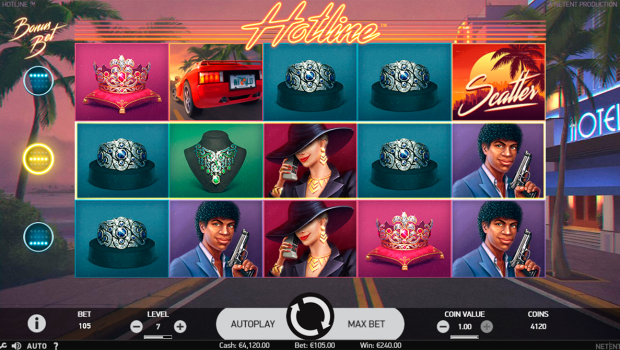
Slots stay the clear backbone of mobile casino gaming, and the factors extend beyond simple popularity. Upright screen orientation, which smartphone users hold for over ninety percent of their app interactions, fits naturally onto the reel layout that slot designers have honed for decades. A five-reel, three-row grid covers the display from edge to edge without demanding sideways rotation, and the rapid session rhythm fits the micro-breaks that characterize mobile usage patterns. We see players playing slots during a five-minute wait for public transport, during commercial breaks, or in idle moments at home. The best mobile slots honor this fragmented attention by providing a clear auto-spin toggle, a prominently displayed balance that updates instantly, and bonus features that trigger with unambiguous visual cues even when the device sound is muted. Progressive jackpot totals that tick upward in real time across a linked network create an additional draw, and our mobile interface guarantees the pooled prize figure remains visible at the top of the screen regardless of how far a player scrolls through the game library.
Casino table games pose a more complex adaptation challenge, and the solutions implemented show a great deal about a platform’s commitment to mobile quality. Blackjack requires that hitting, standing, doubling, and splitting controls fill distinct tap zones large enough to remove ambiguity, yet close enough together that an experienced player never needs to move their grip between decisions. Roulette on mobile works best when the betting grid can be zoomed independently of the wheel animation, letting a player to pinch-expand the number layout for precise chip placement, then shrink it back to watch the ball drop without switching views. Baccarat and poker variants need minimal interface elements by their nature, but card faces must display clearly at sizes as small as eight millimeters across, requiring careful design of pips, index fonts, and contrast ratios. Live dealer studios, the fastest-growing mobile category, increase the technical bar further: a 1080p stream at sixty frames per second consumes roughly four megabytes per minute, so players on capped data plans require the option to toggle down to 720p, and adaptive bitrate switching must reduce video quality gracefully rather than buffering mid-decision when the cell signal weakens.
Bonuses and Promotions Restructured for the Smartphone User Experience
Bonus mechanics that rule desktop casino marketing do not always convert effectively to mobile browsing habits, and we have rebuilt our promotional system around the ways players genuinely discover and redeem offers on their handsets. A conventional welcome banner that works on a full-sized display reduces to a fraction of its designed size on mobile, making the fine print hard to read without zooming. Our strategy places the bonus offer inside the registration sequence itself: as a new player completes the sign-up form on their smartphone, the welcome offer description appears alongside the final approval step with all critical parameters outlined in plain language, including the match rate, maximum bonus amount, minimum qualifying deposit, and the wagering multiplier attached to the aggregate bonus and deposit total. Wagering conditions, the most examined aspect of any casino deal, must be clarified on mobile in a fashion that a player can grasp without accessing a different terms document. A common arrangement at German-facing sites demands a thirty-five to forty-fold turnover of the bonus amount on approved slots, with table game contributions valued at ten to twenty percent and live dealer wagers often excluded totally. The mobile bonus monitor, which we regard as crucial, displays a progress bar showing the portion of wagering done, the remaining turnover amount in euros, and the expiry deadline in days and hours. This tracker reloads after every valid spin or hand and can be pulled up from anywhere inside the game lobby without navigating back to a dedicated promotions page. Time-limited free spin bundles, cashback on net losses, and reload bonuses tied to particular payment methods all gain from comparable mobile-first display treatment, with push notifications that deep-link directly to the claim screen with terms already shown.
Payment System Built for Mobile Checkout
The payment process on mobile brings expectations influenced by years of e-commerce and app-based banking. A player who has just signed up at Velwins Casino and wants to deposit from a smartphone will assess the entire experience by how many steps lie between the impulse to deposit from the moment funds appear. Modern mobile payment rails streamline this journey into what is effectively a single screen: the player picks an amount from preconfigured tiles, approves the payment method, validates via biometric verification, and sees the credited balance within ten seconds. This speed depends on integrations with payment orchestration layers that keep live connections to acquirers, e-wallet APIs, and open banking interfaces. German players mostly use SOFORT, Giropay, and PayPal, each of which functions differently at the technical level. SOFORT requires a temporary connection to the player’s online banking portal, Giropay executes through the cooperative banking network, and PayPal creates a tokenized authorization that can be kept for repeat use. Our mobile interface deals with these divergent flows without ever sending the player into an external browser window that breaks the app experience. Withdrawal processing presents the inverse challenge: the best mobile interfaces show a transaction history with status labels that update in near real-time, revealing a request moving from pending internal review to released to the payment processor. We show typical timelines upfront on the withdrawal screen, and the cashier section handles document uploads for verification by enabling a player to take a picture of an ID or proof of residence directly through the device camera, with client-side image compression reducing upload sizes.
Mobile Compatibility and the Frontier of Casino Mobile Evolution
The variety of mobile hardware accessing casino platforms today covers from five-year-old mid-range Android devices with depleted batteries to the latest iPhone models with dedicated neural processing units, and the platform must offer a consistent core experience across this entire spectrum without degrading its feature set to the lowest common denominator. The game lobby interface employs progressive enhancement: on devices with powerful GPUs, thumbnail animations preview game reels at full frame rate, while older hardware gets static image thumbnails that load instantly and use minimal memory. The search and filter system, which allows players narrow the library by provider, feature type, volatility rating, or theme, is based on server-side indexing so that filtering hundreds of titles does not depend on the device’s processing capacity. We regularly test the full experience on Android devices running Chrome from three major version generations back, as well as on iOS Safari across iPhone models from the SE to the Pro Max line, because the fragmentation in the Android ecosystem signifies that a game performing perfectly on a Samsung flagship shipped six months ago may hesitate on a budget Motorola sold two years ago through a discount carrier. Looking forward, the technologies poised to reshape mobile casino gaming are already in field testing, though wide deployment remains uneven. Augmented reality overlays that project a roulette wheel onto a player’s actual table surface have appeared in prototype demonstrations, but they demand depth-sensing cameras and significant battery reserves that limit their practical reach. Cloud gaming architectures, where the game logic runs entirely on a remote server and streams a video feed to the device, would erase the client-side hardware bottleneck entirely, permitting mobile access to casino experiences that currently demand a desktop GPU. The obstacle is latency: a cloud-streamed live dealer game already exists in practical form, but a cloud-streamed slot where the spin result must feel instantaneous faces physics limitations if the round-trip time between player input and displayed outcome surpasses fifty milliseconds. We monitor these developments continuously and assess them against the non-negotiable benchmarks of reliability, fairness verification, and the regulatory compliance demanded by German licensing. The mobile casino experience that players access through Velwins Casino today shows what currently meets those benchmarks, and the future versions will adopt new capabilities only when they demonstrably benefit the player without introducing fragility or opacity into the systems that protect every wager and payout.